Table of Contents
- Why Book a Heritage Building Restoration Consultation
- Understanding Listed Building Consent Guidance
- What Happens During Your Initial Consultation
- Traditional Building Repair Assessment: What to Expect
- Lime Mortar Restoration Advice for Period Properties
- How to Prepare for Your Consultation
- Selecting the Right Heritage Building Restoration Professional
- Listed Building Restoration Advice: Next Steps After Consultation
- Frequently Asked Questions
Last Updated: October 19, 2026
Why Book a Heritage Building Restoration Consultation
A heritage building restoration consultation is your first step toward protecting a period property. Owners who repair without understanding listed building or conservation area requirements can face thousands in corrections, planning rejections, or damage to irreplaceable historic fabric.
The consultation is where we listen to your vision, examine your building's condition, and explain what's genuinely necessary versus what's cosmetic, answering the real questions: What will this cost? How long will it take?
Understanding Listed Building Consent Guidance
Listed building consent is a legal requirement, not an optional step. Any work affecting the character of a listed building needs written approval from the local planning authority before work starts, including internal alterations that may seem minor: removing internal walls, replacing windows, installing central heating, or altering stonework and plaster finishes.
The guidance issued by the local authority's conservation officer is your roadmap, setting out what is likely to be acceptable for your building and why. The purpose is to preserve historic fabric and character, not to prevent you from living comfortably.
How consent is assessed
Conservation officers typically assess an application against a few familiar questions:
- What is the significance of the heritage asset? This draws on the list entry, any conservation area appraisal, and the applicant's heritage statement.
- What is the impact of the proposals on that significance? Officers look at scale, materials, detailing and the extent of intervention.
- Can any harm be avoided, minimised or mitigated? A well-argued justification with sympathetic materials and methods carries real weight.
A strong application answers these questions directly, which is why a heritage statement drawn up by someone who understands the building is often the difference between approval and refusal.
Consent, planning permission and conservation areas
Listed building consent and planning permission are separate processes, and you may need both (When is permission required?). Listed building consent deals with the impact on the building's special interest; planning permission deals with land use and the wider planning framework.
Getting this wrong can mean stopping work midway through, reapplying, or undoing completed work. A heritage building restoration consultation clarifies which permissions apply to your situation and in what order they should be sought.
Working with the local authority
The practical route runs through your local planning authority's conservation officer. Early engagement is almost always worthwhile: a pre-application discussion can reveal whether a proposal is likely to be supported before you spend money on drawings and reports. Procedures vary between authorities, so confirm local requirements rather than assuming a uniform process.
Fees and timescales
Listed building consent applications attract a local authority fee depending on the type and scale of work. Straightforward applications on modest buildings are often determined within a couple of months, while complex or contested schemes take longer. Build these timescales into your project plan, and do not instruct a contractor to start before consent is in place.
What Happens During Your Initial Consultation
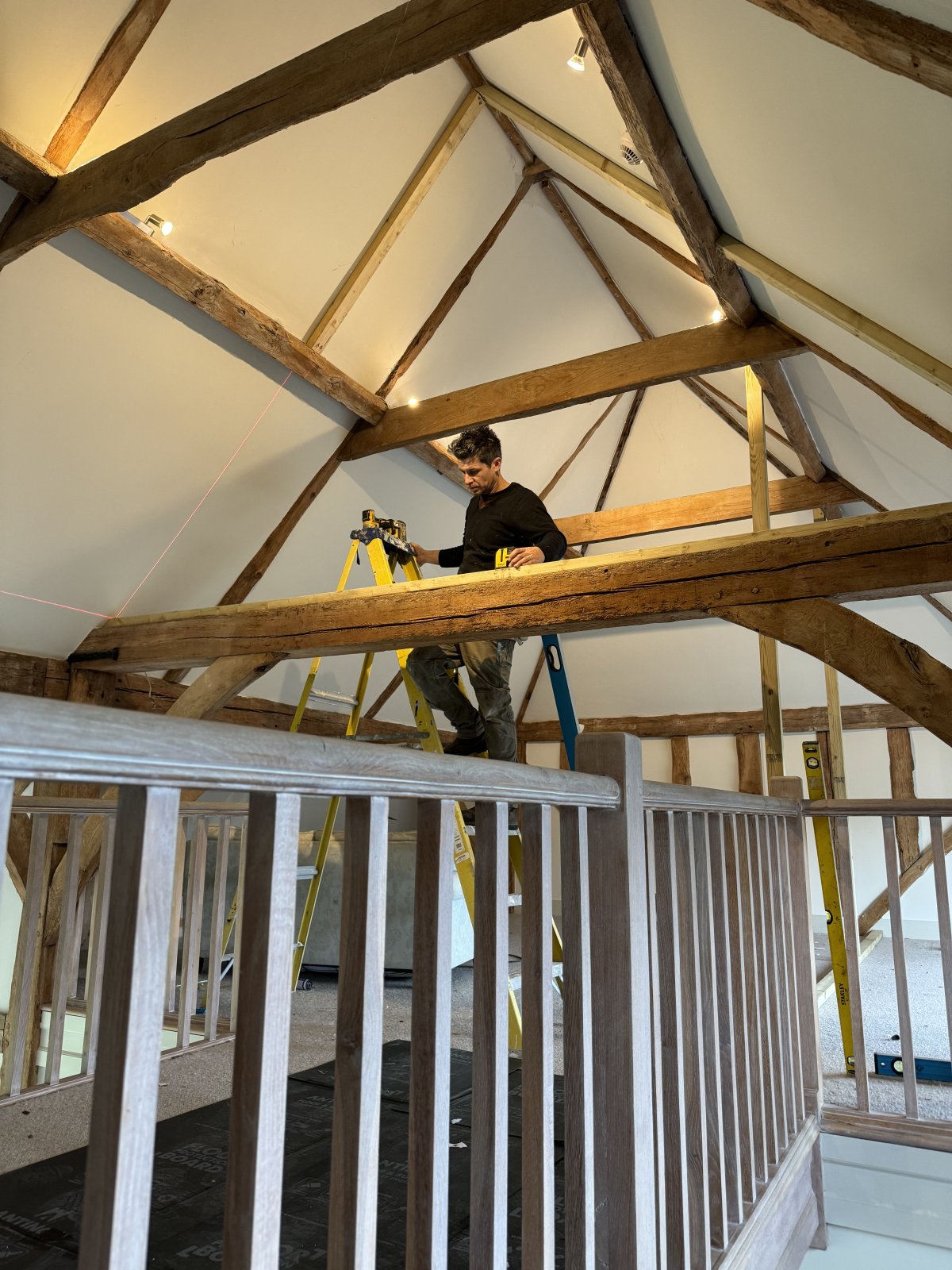
Your initial consultation typically involves a detailed site visit. The conservation professional examines the building's structure, materials, and condition, including timber frames, masonry, roof coverings, windows, and internal finishes.
Site inspection and condition assessment
The site inspection is where the professional evaluates what's actually happening in your building: signs of dampness, rot or woodworm in the timber, the condition of original windows, and whether the roof structure is intact.
A condition assessment identifies both urgent repairs and longer-term maintenance. Urgent repairs such as roof leaks, structural movement, or failing timber come first because they prevent further deterioration; longer-term work might include repointing, redecorating, or upgrading services.
Heritage assessment and documentation review
The heritage assessment places your building in context: when it was built, its architectural style, and the materials and techniques originally used. This informs how you repair and maintain it, since a Georgian townhouse needs different treatment than a Victorian villa or a medieval timber-frame barn.
The professional will review available documentation: planning records, previous survey reports, historical maps, and building records if they exist.
Traditional Building Repair Assessment: What to Expect
Traditional buildings were constructed using materials and methods very different from modern construction: lime mortar, not cement; solid stone or brick walls, not cavity walls; timber frames carrying the load, not steel.
When you repair a traditional building, respect those original principles.
The assessment flags materials incompatible with the original construction, explains why certain modern shortcuts don't work on period buildings, and recommends appropriate repair methods and materials.
Lime Mortar Restoration Advice for Period Properties
Lime mortar is the binding material used in most buildings constructed before the 20th century.
The wrong mortar can damage the building. Cement mortar is too hard and rigid, preventing soft historic brick or stone from moving naturally and trapping moisture. Over time, it causes the historic material to spall and crumble.
Lime mortar restoration advice from a conservation professional specifies the right mortar mix for your building, identifies the original composition if possible, and explains why the correct mortar matters and what happens if you use the wrong one.
How to Prepare for Your Consultation
Preparing properly turns a vague site visit into a focused, useful meeting. Arrive with enough information that the conservation professional can give specific advice rather than generic observations, and leave with a clear idea of scope, cost and next steps.
Booking the consultation: a step-by-step approach
Most owners book in a predictable sequence:
- Confirm your building's designation. Check the statutory list entry for your address on the relevant historic environment record, and confirm whether the property sits within a conservation area. This determines which consent regimes apply and therefore what the consultant needs to advise on.
- Define the brief in one paragraph. Write down what you want to achieve (for example, re-roofing a rear range, replacing failed windows, or converting a barn), what you suspect is wrong, and your rough budget and timescale. A clear brief gets a more accurate fee quote.
- Shortlist two or three professionals. Look for conservation-accredited practitioners and firms with demonstrable experience of your building type and materials. Ask each for a written scope and fee before committing.
- Ask what the fee covers. Clarify whether the quoted figure includes the site visit, a written report, historical research, and preliminary consent advice, or whether those are charged separately.
- Book with a clear agenda. Confirm who will attend, how long the visit will take, what access is needed (loft hatches, roof voids, cellars), and when you will receive the written output.
Documents and information to gather
Collect these before the visit so the professional can work efficiently:
- The statutory listing entry and any conservation area designation details
- Title deeds or property information, including boundaries and any covenants
- Existing surveys or structural reports, even old ones
Having these ready saves time and gives the professional context, helping them spot problems connected to earlier work, which is often where the real causes lie.
Questions to ask your conservation professional
Before the consultation ends, ask these questions:
- Which consents will the work need, and are listed building consent and planning permission both required?
- What is the realistic timetable for obtaining those consents?
- Which repairs are urgent and which can be phased?
These questions clarify expectations and reveal whether the professional understands your building. A consultant who answers precisely, and is candid about what they do not yet know, is usually a better bet than one who promises certainty before seeing the building.
What the consultation is likely to cost
Fees vary with the size and complexity of the building and the scope of the brief. As a broad guide, an initial consultation and written advice for a modest listed cottage is typically a few hundred pounds, while a detailed heritage assessment for a complex, highly graded building can run into four figures. Many practices quote a fixed fee for the initial visit and report, and some credit it against later project work if you appoint them.
Selecting the Right Heritage Building Restoration Professional
Not all builders understand listed buildings or heritage conservation. Some know modern construction but little about period properties; others understand the technical side but struggle with planning applications. You need someone who combines technical expertise, conservation knowledge, and planning experience.
Experience with listed building projects and planning approval
Look for a professional with genuine experience on listed building projects. Ask for references from owners of similar buildings, photographs of completed work, and specifically about their experience with planning applications and listed building consent, where many projects stall or fail.
USFEW brings this combination of skills to every project. We understand the technical demands of period properties, timber frames, lime work, masonry, and we understand the regulatory landscape that governs them.
Understanding consultation costs and scope
Consultation costs vary with the building's size, complexity, and your needs. A straightforward consultation for a small cottage costs less than a detailed heritage assessment for a complex Grade II* listed manor house.
Before you book, clarify what the consultation includes: a site visit, written report, recommendations, and next steps? Research into the building's history? Preliminary advice on planning requirements?
Listed Building Restoration Advice: Next Steps After Consultation
After your consultation, you'll have a clearer picture of what needs doing and what permissions you'll need.
The next step is usually to decide whether to proceed with the professional who did the consultation.
Many owners find that booking a heritage building restoration consultation is the best investment they make in their property.
Getting your listed building or period property right starts with understanding what you're working with and what the rules require.
Frequently Asked Questions
What happens during a heritage building restoration consultation?
A heritage building restoration consultation typically includes a thorough site inspection, condition assessment of period fabric and structural elements, review of any existing documentation or heritage statements, and discussion of your restoration goals. The conservation professional will examine original finishes, identify repair needs, and advise on planning approval requirements. You'll leave with a clear understanding of what work is needed, timescales, and next steps for securing listed building consent if required.
How do I prepare for a consultation about restoring a heritage property?
Gather any existing surveys, planning documents, or heritage statements for your property. Prepare a list of specific concerns, whether structural repairs, dry rot, insulation, or planned alterations. Take photographs of problem areas. Note the property's grade (Grade II, Grade II*, or Grade I) and whether it sits within a conservation area. Write down your renovation goals and timeline. Having this information ready helps the conservation professional give you more targeted advice and accurate scope during the initial meeting.
What should I ask a heritage restoration specialist?
Ask about their experience with listed building projects similar to yours, their track record securing planning approval and listed building consent, and how they approach traditional materials like lime mortar and timber. Enquire about their process for unexpected discoveries during work, how they handle cost overruns, and whether they provide references from completed projects. Ask what the consultation will cover, how long it typically takes, and what documentation they'll provide. Understanding their approach to authentic restoration versus modern shortcuts is essential.
Do I need consent before making changes to a listed building?
Yes. Listed building consent is required for most alterations, repairs, and extensions to Grade II, Grade II*, and Grade I properties. This includes internal changes that affect character, such as removing period features or installing modern materials over historic fabric. If your property is in a conservation area, conservation area consent may also apply to certain external works. A heritage restoration consultant will advise on what consent you need and guide you through the application process with your local authority.
How do I choose a contractor for heritage building restoration?
Look for contractors with proven experience restoring listed buildings and navigating planning approval processes. Check references from similar projects, ideally ones you can visit. Verify they understand traditional techniques like lime mortar restoration, timber frame repair, and period masonry work. Assess whether they take a sympathetic approach to preserving historic fabric rather than using modern shortcuts. Ask about their relationship with local conservation officers and their track record with listed building consent applications. Honest communication about costs and realistic timescales is a good sign.
Frequently asked questions
← All articles