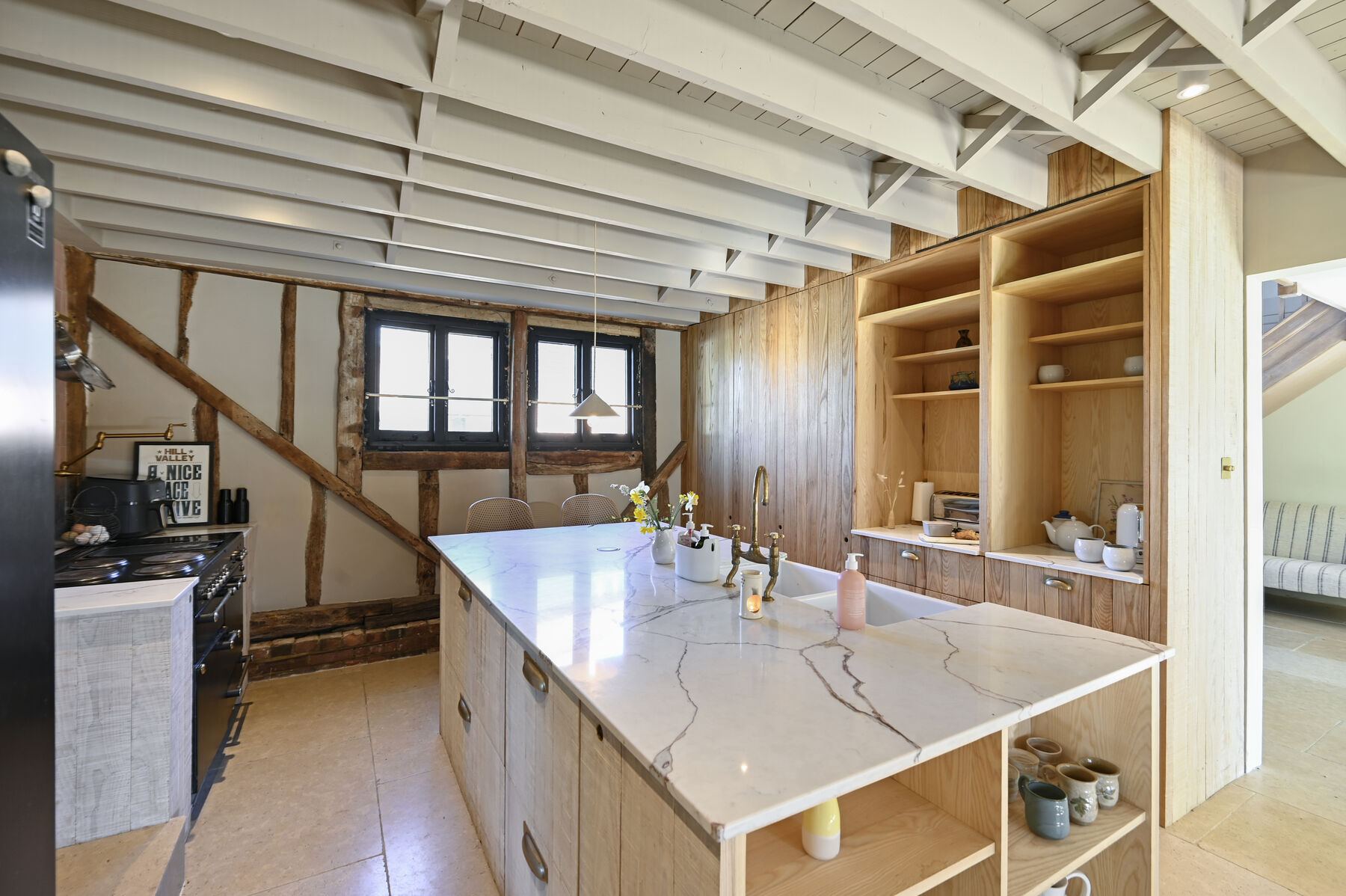
Kent is packed with listed buildings, from timber-framed hall houses and farm barns to smart Georgian townhouses. And here's the bit that catches people out: listing covers the whole building, inside and out. Not just the pretty front. Later additions and attached structures are usually in there too.
When you need listed building consent
In England, you need listed building consent from your local council for any work that would affect the character of a listed building. In real life, that tends to mean things like:
- Taking out or moving walls, or knocking through new openings
- Replacing windows, doors or roof coverings
- Changing floors, plaster, beams or old joinery
- Adding extensions, or running new services through historic fabric
Doing work that needs consent without getting it is a criminal offence, which is not the kind of home improvement anyone wants. Some genuine like-for-like repairs may not need consent, but don't take our word, or your neighbour's, for it. Your council's conservation officer is the one to ask.
Getting ready
A good application shows you understand what makes the building special, and how your plans respect it. That usually means drawings, a heritage statement and a clear explanation of the materials and methods. Our tip: speak to the conservation officer early. A friendly chat at the start beats a frosty letter at the end.
Where we come in
We work on listed buildings all over Kent, and we're very used to working alongside architects and conservation officers. We'll tell you honestly what's realistic, write up a detailed specification using traditional materials like lime and oak, and then do the work with the care an old building deserves. If you'd like to see one in the flesh, have a look at The Kent Barn Conversion, a Grade II-listed grain barn we brought back to life.
Planning work on a listed home? Start a conversation. Free advice, no obligation, and we promise not to bore you with planning law.
← All articles