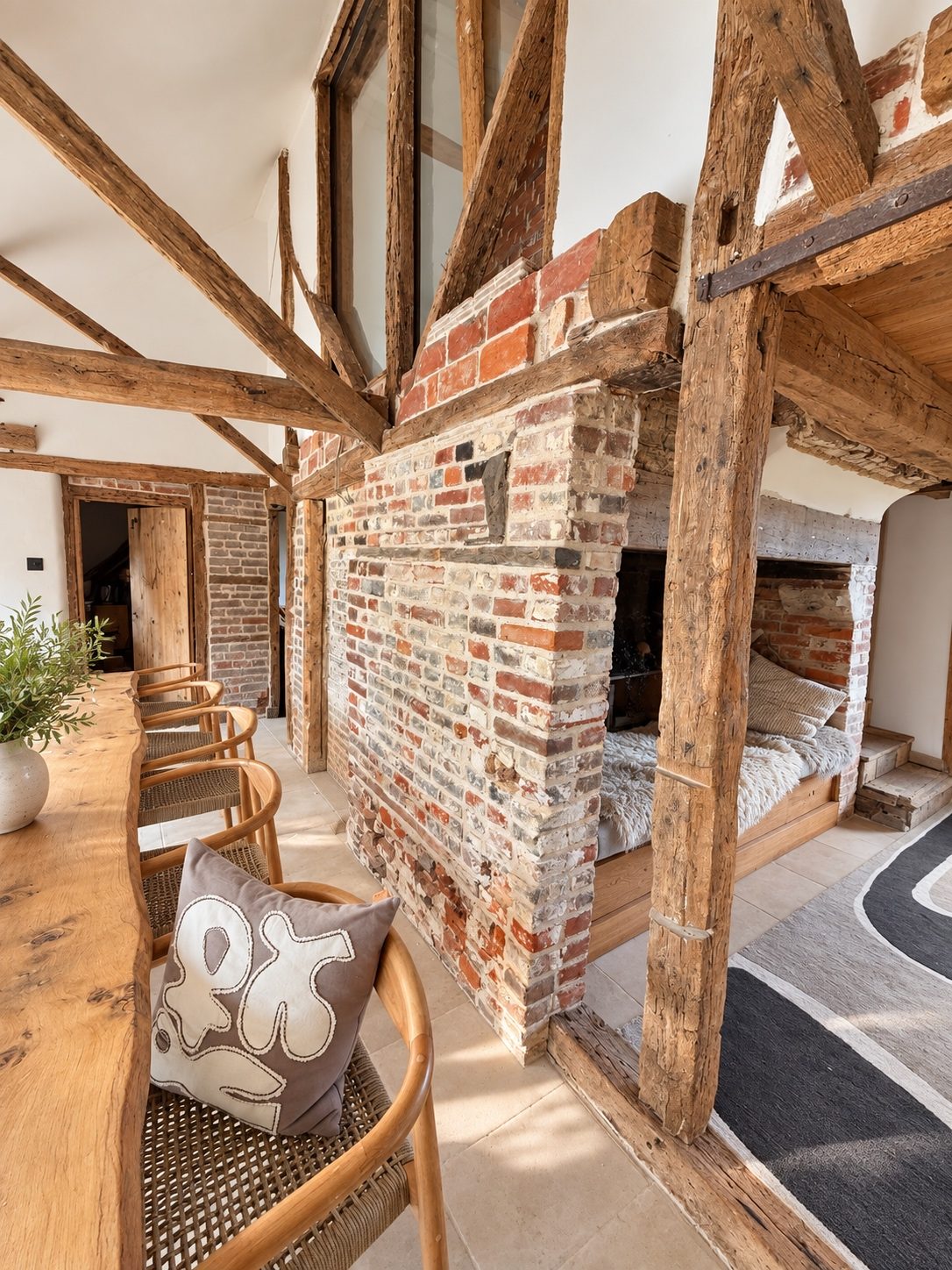
Before the 1920s, most Kent homes were built with solid walls of brick, flint, stone or timber frame, all held together and finished with lime. No cavity, no membranes, no fuss. Water got in, water got out, and everyone rubbed along nicely for a few hundred years.
Then the twentieth century turned up with a bag of cement and good intentions.
Where it all goes wrong
Cement pointing, cement render and gypsum plaster are hard, tough and much less breathable than lime. That sounds like a good thing until you realise the moisture still gets into the wall. It just can't get out again. So it sits there, sulking, and finds other ways to make itself known:
- Damp patches and salty bloom on the inside walls
- Brick faces crumbling away, because the water is now escaping through the brick instead of the joint
- Rot in timber frames, sole plates and joist ends sat in wet masonry
- Fine cracks in rigid render that let the rain in and politely keep it there
Put simply, it's a bit like wearing a bin bag to go running. Waterproof, yes. Comfortable, no.
Why lime works
Lime is breathable, so the wall can dry out. It's softer and more forgiving than cement, which suits old buildings that shift about with the seasons like the rest of us. And in a good lime wall the mortar is the weakest link on purpose. It's the bit that wears and gets renewed, rather than the 300-year-old brick next to it. Sacrificial, but in a noble way.
There's no single "lime" either. Lime putty for fine plaster, natural hydraulic limes for pointing and render in more exposed spots, and plenty in between. Picking the right one for the building, the wall and the weather is half the job.
The catch
Lime doesn't like to be rushed. It sulks in frost, hates strong sun and drying winds, and needs a bit of looking after while it cures. So we plan lime work around the seasons rather than the other way round. Get it right and you've got a finish that looks like it belongs, and a wall that'll see out a few more generations.
Got damp in an old house, or walls someone has "helpfully" cement rendered? We're happy to come and have a look. Start a conversation, or have a nose at our restoration work.
← All articles